

/135.4723453,34.8470676,9/397x132?access_token=pk.eyJ1IjoiamFwYW50cmF2ZWxtYXBzIiwiYSI6ImNqbXBtOXYxbDB5Z3ozbHFrazJuYWMwOGYifQ.v15fy_mcFWtgopmz8PhwqA)
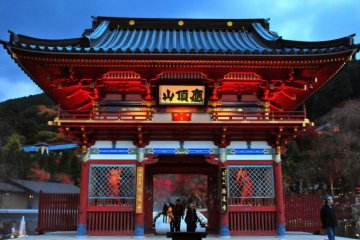
Katsuoji Temple
Katsuoji Temple, situated north of Osaka City and nestled in the idyllic nature of Minoo, is famous for its lucky reputation. For centuries, emperors and shoguns prayed at this temple for victory in their endeavors. Today, visitors still flock to the sacred grounds to pray for victor’s luck with work, academics, business, sports, and more. Katsuoji’s lucky atmosphere is complemented by an infinite amount of daruma dolls strewn across the complex, which are Japanese symbols of good luck. History The temple’s history began in 727 when two Buddhist priests, Zenchu and Zensan, constructed a hut to practice Buddhism. Later in 765, Prince Kaisei joined the priests as a student of Buddhism and built Mirokuji Temple onsite. About 15 years later, Myokan, who is said to be a reincarnation of Kannon Bosatsu, the goddess of mercy, added a sandalwood carved statue of Kannon with one thousand hands as a deity of the temple. However, the temple did not gain its lucky reputation until the ninth century when Emperor Seiwa fell ill. In an attempt to cure his illness, devout followers went to Mirokuji to pray for his recovery. After the emperor recovered, he attributed his renewed health to Mirokuji and renamed the temple Katsuoji, which roughly translates to, “the temple of the victorious king.” Katsuoji was initially written with the character for king, but was later changed to the similar sounding kanji for tail—creating a more modest temple name. Today - Daruma Traditions Today, Katsuoji still exudes an atmosphere of luck and is renowned for its ubiquitous daruma doll collection. These red dolls, large and small, are scattered throughout the complex, decorating seemingly every surface. Contribute your own luck to the temple by purchasing a daruma and participating in its ritual. After you purchase the doll, write your goal on the back and go to the main temple to light incense and pray for the success of your goal. After praying, paint a black circle in the doll’s right eye (both eyes are blank when purchased). Bring the incomplete doll home and place it in a spot you will see everyday to remind yourself of your goal. After you complete your goal, take the daruma back to Katsuoji, where they will color in the left eye in a meditative ritual. Congrats! Now you can place your doll on the temple grounds as a symbol of your victory. Alternatively, you can paint the left eye yourself and keep the doll in your home as a reminder of your success! Aside from the Katsuoji’s lucky aura, the temple grounds also create an inviting and tranquil haven among the trees. When you first approach the temple, you will be greeted by an impressive torii gate painted vermillion. After you pass under the entrance, you will cross over a lake on a mystical bridge that is shrouded in an ever-present mist. The main temple and surrounding structures are all painted vibrant red, matching the tiny scattered daruma. Enjoy the juxtaposition of Katsuoji’s brilliance against the natural tones of the surrounding mountains. The temple is especially beautiful when it is complemented by autumn leaves and springtime cherry blossoms.

