Mitaki Temple

51 評論
Mitaki-dera (Photo: 大江万里 / Public Domain)

Mitaki-dera is a beautiful traditional Japanese temple complex, tucked away in a forest on the slopes of Mount Mitaki, just north of the city of Hiroshima. Mitaki is named for the three waterfalls on its site, as its Japanese characters literally" "three" "and "" Waterfall "" read.

景點資訊

地址

411 Mitakiyama, Nishi Ward, Hiroshima, 733-0805 (路線)

電話號碼

082-237-0811

備品

  • 問訊櫃檯
  • 免費停車場
  • 付費停車場
  • Restroom

相關文章

Mitaki Temple

5

1評論
  • 5 星 1
  • 4 星 0
  • 3 星 0
  • 2 星 0
  • 1 星 0

評論

發掘附近

Okonomimura

Okonomimura

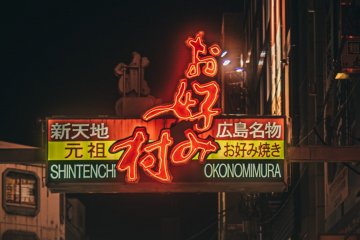
Okonomimura is a Hiroshima-style okonomiyaki theme park located in Shintenchi, Naka-ku, Hiroshima, near the east end of the Hondori shopping street. It has 24 okonomiyaki restaurants, each with a slightly different style and one different selection of ingredients. Okonomiyaki began in the pre-war period as a dish called "Issen Yoshoku" ("" Western food for a dime ""), which was very popular with common people. It consisted of a flour paste cooked with onions, dried shrimp, and spices. After the war, other ingredients such as cabbage, eggs, seafood, buckwheat and wheat noodles were used to improve the diet in these tough times. This is how today's Hiroshima-style okonomiyaki came about. [Photo: Victor Lee / CC BY-NC-ND 2.0]

廣島 距離3.9公里
Gokoku Shrine

Gokoku Shrine

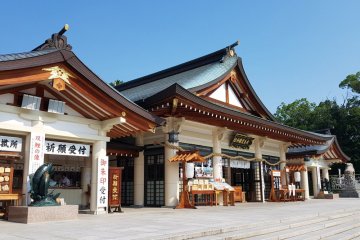
Located on the grounds of Hiroshima Castle, Hiroshima Gokoku Jinja (広島護国神社) is a Japanese Shinto Shrine in central Hiroshima City. "Gokoku" Shrines are Shinto shrines designated as places of worship for those who have died in war. Like the controversial Yasukuni Shrine in Tokyo, what became Hiroshima's Gokoku Shrine was also originally constructed in 1868 to commemorate the Hiroshima Han victims of the Boshin War. Seventy-eight souls were enshrined in the Futabanosato shrine, named Mikureisha (水草霊社). Eventually, the total number of souls enshrined there reached 92,700, including the soldiers from the former Aki no kuni (now western Hiroshima Prefecture) who died in Japan's wars up until the start of the Great East Asian War (as World War 2 post Pearl Harbor is known in Japan) and around 10,000 workers and volunteer corps who were stationed in Hiroshima and lost their lives to the A-Bomb. In 1934 it was dismantled, rebuilt and renamed Kansaishoukonsha (官祭商塊社), and moved to a corner of the west of the military parade ground, where the Hiroshima Municipal Baseball Stadium stood until the end of 2008. In 1939, its name was changed by order of the Interior Ministry to the Hiroshima Gokokujinja. In 1945 it was destroyed by the atomic bomb, and was rebuilt on the current site within the grounds of Hiroshima Castle in 1956 with the aid of donations from the citizens of Hiroshima. The current main building is even more recent, rebuilt in 1995, when the grand stone slab approach was also added. Events at the shrine are held throughout the year.

廣島 距離2.8公里

Hiroshima Castle

Hiroshima Castle

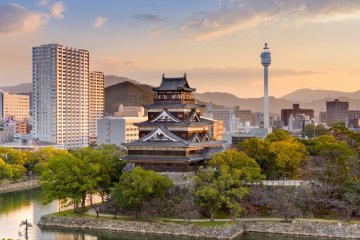
Hiroshima Castle, also known as Carp Castle, was originally built in the 1590s. It was destroyed by the atomic bomb along with the rest of the city in 1945 and rebuilt in 1958. Since then, it has also served as a museum of the history of Hiroshima before World War II The history of the castle itself, as well as Japanese castles in general, is clearly explained. Hiroshima Castle is a good example of a castle built on a plain in the center of a city as opposed to castles on hills and mountain tops. Its main tower is five stories high and its grounds are surrounded by a moat. Within the castle grounds there is also a shrine, some ruins and some reconstructed Ninomaru buildings (second circle of defense).

廣島 距離2.8公里
廣島原爆紀念館

廣島原爆紀念館

與和平紀念博物館一樣,廣島的原爆圓頂館作為和平的象徵,吸引許多來自世界各地的朝聖者。廣島變成一座美麗的城市,而圓頂館是市民們已恢復的證據:獨自站立,但又被現代的高樓大廈包圍。這是很驚人的畫面,同時提高了志氣。 我去的時候是11月的某個雨天,旁邊還有上百位參加校外教學的學生。雨水讓所有物變得新鮮又有生氣。從前的恐懼是事實,但現在懷抱更多的是希望。

廣島 距離3.1公里
探索廣島